
Introduction
A diagnosis of a bladder tumor can naturally raise many questions: Why is the tumor being removed? How is the procedure performed? Will the tissue be tested? What happens after treatment?
TURBT Procedure—short for transurethral resection of bladder tumor—is a commonly used urological procedure for examining and removing bladder tumor tissue through the urethra. It can play an important role in diagnosing bladder cancer and determining the next step in treatment.
For patients, understanding the purpose of the procedure and what to expect can make the treatment journey easier to navigate.
What Is TURBT?
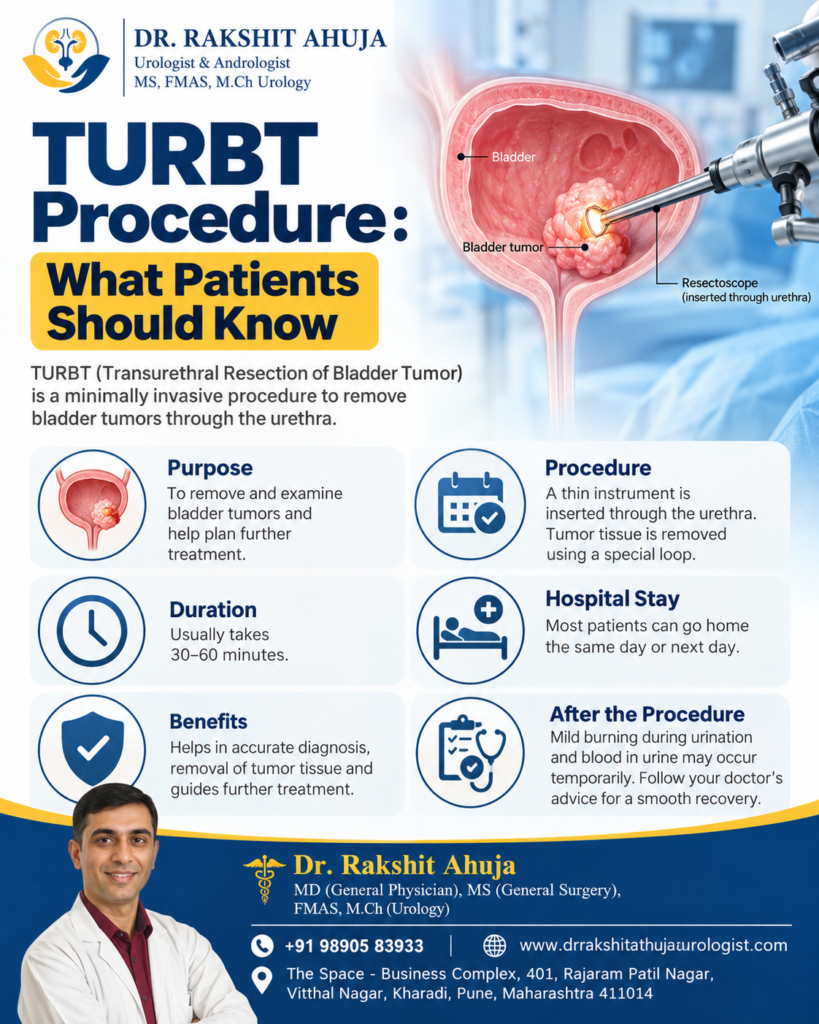
Transurethral resection of a bladder tumor involves passing a specialised instrument through the urethra into the bladder. This allows the urologist to access the bladder without making an external incision.
The instrument allows the urologist to view the inside of the bladder and remove visible tumor tissue. The tissue is then sent for pathological examination, which helps determine the type and characteristics of the tumor.
The information obtained from the tissue examination is important because bladder cancer treatment depends on factors such as the tumor’s stage, grade, size and number.
Why Is TURBT Done?
The procedure may serve both diagnostic and therapeutic purposes.
1. To Examine a Suspected Tumor
When a bladder abnormality is identified through imaging or cystoscopy, tissue may need to be obtained for laboratory examination.
2. To Remove Visible Tumor Tissue
The surgeon can remove accessible tumor tissue during the procedure.
3. To Determine the Depth of Tumor Invasion
Pathological examination can help determine whether the tumor has reached deeper layers of the bladder wall. This distinction is particularly important when planning subsequent treatment.
How Is the Procedure Performed?
A thin instrument called a resectoscope is introduced through the urethra and guided into the bladder.
The urologist examines the bladder and identifies abnormal tissue. A specialised loop attached to the instrument can then be used to remove tumor tissue or treat the area using electrical energy, depending on the surgical technique.
Because access is through the natural urinary passage, there is no external abdominal incision for the standard transurethral approach.
The removed tissue is carefully collected and sent for histopathological assessment.
What Can the Pathology Report Tell You?
The pathology report is an important part of bladder cancer care.
It can provide information about:
- The type of tumor
- Tumor grade
- Depth of invasion
- Whether muscle tissue is present in the specimen
- Other characteristics relevant to treatment planning
The stage and grade of bladder cancer, along with tumor size and number, influence subsequent management. In some situations, another resection may be recommended if the first procedure did not obtain enough tissue or if further assessment is necessary.
What Happens After the Procedure?
After the procedure, patients are monitored while recovering from anaesthesia and the surgical intervention.
Some people may temporarily experience:
- Burning while passing urine
- Increased urinary frequency or urgency
- Mild discomfort
- Blood in the urine
The recovery experience varies between individuals and depends on the extent of treatment and other health factors.
Your urologist will provide specific instructions regarding medicines, fluids, activity and follow-up.
If significant bleeding, inability to pass urine, fever, severe pain or other concerning symptoms occur, prompt medical attention is important.
Does TURBT Cure Bladder Cancer?
It is important to understand that removal of a visible bladder tumor does not necessarily mean that no further treatment or monitoring will be required.
Bladder cancer can have different risk levels and may recur. Depending on the pathology and risk category, further treatment may include intravesical therapy, surveillance cystoscopy, additional surgery or other cancer treatments.
For this reason, follow-up after tumor removal is an important part of bladder cancer care.
TURBT and Non-Muscle-Invasive Bladder Cancer
Transurethral tumor removal is commonly used in the initial management of non-muscle-invasive bladder cancer. Depending on the risk category, patients may subsequently undergo surveillance or receive treatment delivered directly into the bladder.
The appropriate approach depends on the pathology findings and the patient’s overall clinical situation.
Is TURBT Used for Muscle-Invasive Bladder Cancer?
TURBT can also have a role in selected cases of muscle-invasive bladder cancer, including obtaining tissue and assessing the tumor.
However, muscle-invasive disease generally requires more comprehensive treatment planning. Depending on the stage and patient’s circumstances, treatment may involve bladder removal, chemotherapy, radiation-based approaches, immunotherapy or combinations of treatments.
Therefore, the result of the tissue examination is an important factor in deciding what happens next.
What Questions Should Patients Ask Their Urologist?
Before or after the procedure, patients may find it useful to ask:
About the Diagnosis
- What did the pathology report show?
- What is the tumor grade?
- Has the tumor invaded the muscle layer?
About Treatment
- Is additional treatment required?
- Will another bladder examination or resection be needed?
- What type of follow-up is recommended?
About Recovery
- What symptoms are expected after the procedure?
- When can normal activities be resumed?
- Which symptoms require urgent medical attention?
Having a clear discussion with your treating team can help you understand your individual treatment plan.
Bladder Tumor Care in Pune
Dr. Rakshit Ahuja is a Urologist & Andrologist in Pune who provides evaluation and treatment for urological conditions, including bladder-related problems.
Patients with blood in the urine, an abnormal bladder finding, or a diagnosed bladder tumor may require appropriate urological assessment. The recommended investigation and treatment depend on the individual’s symptoms, test results and diagnosis.
Conclusion
Understanding a bladder tumor diagnosis can be challenging, but knowing what a transurethral tumor resection involves can help patients prepare for discussions with their urologist.
The procedure allows visible bladder tumor tissue to be removed and examined. The pathology findings then help guide further management. Because bladder cancer can vary considerably between patients, treatment and follow-up should always be personalised according to the tumor’s characteristics and the patient’s overall health.