
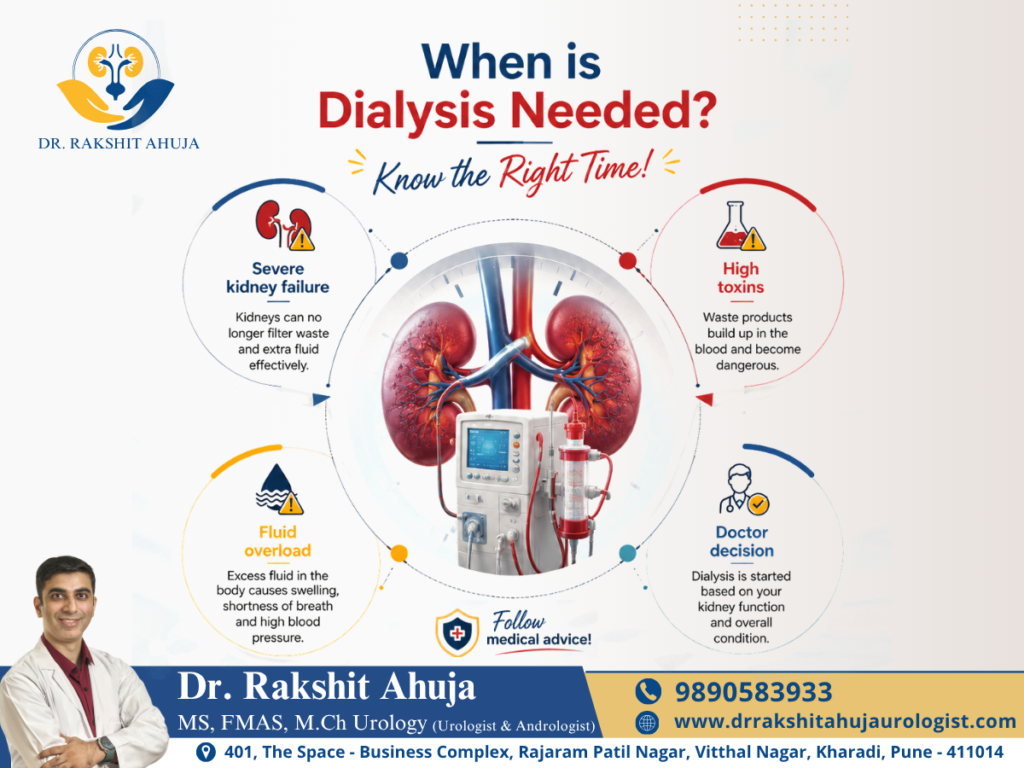
Kidneys play a vital role in maintaining overall health by filtering waste products, balancing fluids, regulating blood pressure, and maintaining electrolyte levels in the body. When the kidneys lose their ability to perform these essential functions, waste products and excess fluid begin to accumulate in the bloodstream. In such situations, dialysis may become necessary to support kidney function and protect the body from life-threatening complications.
As a trusted Kidney Specialist In Pune, Dr. Rakshit Ahuja, Kidney Specialist In Pune, helps patients understand kidney disease progression and determine the most appropriate time to start dialysis. Early diagnosis and timely intervention can significantly improve quality of life and long-term health outcomes.
What Is Dialysis?
Dialysis is a medical treatment that performs some of the functions of healthy kidneys when they can no longer work effectively. It helps remove:
- Excess waste products
- Extra fluids
- Toxins from the blood
- Excess salts and minerals
Dialysis does not cure kidney disease, but it helps patients maintain their health when kidney function has declined significantly.
Why Do Patients Need Dialysis?
Dialysis becomes necessary when kidney function drops to a level where the body can no longer eliminate waste and maintain fluid balance on its own.
Common causes of kidney failure include:
- Chronic Kidney Disease (CKD)
- Diabetes
- High blood pressure
- Polycystic Kidney Disease
- Glomerulonephritis
- Severe kidney infections
- Acute Kidney Injury (AKI)
Many patients are surprised to learn that kidney disease can progress silently for years without noticeable symptoms. This is why regular kidney health checkups are essential.
Signs That Dialysis May Be Needed
1. Severe Kidney Failure
One of the primary reasons for starting dialysis is advanced kidney failure. When kidney function falls below approximately 10–15% of normal capacity, dialysis is often recommended.
At this stage, the kidneys are unable to:
- Remove toxins effectively
- Maintain electrolyte balance
- Regulate fluid levels
- Control blood pressure properly
Patients with end-stage kidney disease often require dialysis to survive and maintain daily activities.
2. High Levels of Toxins in the Blood
Healthy kidneys continuously remove waste products such as urea and creatinine. When kidney function declines, these substances accumulate in the bloodstream.
High toxin levels can cause:
- Persistent nausea
- Vomiting
- Fatigue
- Weakness
- Loss of appetite
- Difficulty concentrating
- Metallic taste in the mouth
Blood tests help monitor toxin levels and determine whether dialysis is required.
As an experienced Kidney Specialist In Pune, Dr. Rakshit Ahuja closely monitors these laboratory parameters to guide treatment decisions.
3. Fluid Overload
Another common indication for dialysis is fluid overload.
When kidneys stop removing excess fluid effectively, fluid accumulates throughout the body, leading to:
- Swelling in the legs and ankles
- Facial puffiness
- Weight gain
- High blood pressure
- Shortness of breath
Severe fluid retention can result in fluid accumulation around the lungs, making breathing difficult and potentially dangerous.
Dialysis helps remove excess fluid and reduces the strain on the heart and lungs.
4. Dangerous Electrolyte Imbalances
Kidneys regulate essential electrolytes such as potassium, sodium, and phosphorus.
When kidney function declines, potassium levels can become dangerously high. Elevated potassium levels may cause:
- Muscle weakness
- Irregular heartbeat
- Cardiac arrest
- Sudden death
In emergency situations, dialysis may be necessary to rapidly correct severe electrolyte imbalances.
5. Persistent Symptoms Despite Treatment
Sometimes dialysis is recommended when symptoms continue despite medications and dietary modifications.
Symptoms may include:
- Extreme fatigue
- Persistent itching
- Difficulty sleeping
- Muscle cramps
- Breathlessness
- Confusion
- Loss of appetite
When these symptoms significantly affect quality of life, dialysis can help improve overall well-being.
Does Every Kidney Disease Patient Need Dialysis?
No. Not all patients with kidney disease require dialysis.
Many individuals with early-stage kidney disease can successfully manage their condition through:
- Blood pressure control
- Diabetes management
- Kidney-friendly diet
- Medication
- Regular monitoring
The decision to start dialysis depends on multiple factors, including kidney function, symptoms, blood test results, and overall health.
This is why consultation with a qualified Kidney Specialist In Pune is essential before making treatment decisions.
How Is the Decision Made?
The decision to initiate dialysis is based on:
Kidney Function Tests
Doctors assess Glomerular Filtration Rate (GFR) and creatinine levels to evaluate kidney performance.
Patient Symptoms
Symptoms often provide valuable information about how kidney disease is affecting the body.
Fluid Status
Excess fluid accumulation may indicate the need for dialysis.
Electrolyte Levels
Abnormal potassium and other electrolyte levels are carefully monitored.
Overall Medical Condition
The patient’s age, medical history, and general health are considered before starting dialysis.
Types of Dialysis
Hemodialysis
Blood is filtered through a dialysis machine that removes waste products and excess fluid.
Peritoneal Dialysis
The lining of the abdomen acts as a natural filter to remove toxins and excess fluids.
The most suitable option depends on the patient’s medical condition and lifestyle requirements.
Importance of Early Kidney Disease Detection
Early detection of kidney disease can delay or even prevent the need for dialysis.
Regular kidney screening is particularly important for individuals with:
- Diabetes
- High blood pressure
- Family history of kidney disease
- Heart disease
- Obesity
Routine checkups allow specialists to identify kidney problems before they become severe.
Expert Kidney Care in Pune
Patients seeking advanced kidney care can consult Dr. Rakshit Ahuja, Kidney Specialist In Pune, for comprehensive evaluation, diagnosis, and treatment of kidney disorders. Whether managing chronic kidney disease, kidney stones, urinary disorders, or dialysis planning, timely expert care can make a significant difference in long-term outcomes.
For patients searching online for trusted renal care, the Google Business Profile Dr. Rakshit Ahuja, Kidney Specialist In Pune provides reliable information about specialized kidney treatment services in Pune.
Conclusion
Dialysis becomes necessary when the kidneys can no longer effectively remove waste products, toxins, and excess fluid from the body. Severe kidney failure, fluid overload, high toxin levels, dangerous electrolyte imbalances, and persistent symptoms are some of the key indicators that dialysis may be required.
Understanding the warning signs and seeking early medical attention can help prevent complications and improve quality of life. If you or a loved one has been diagnosed with kidney disease, consult Dr. Rakshit Ahuja, Kidney Specialist In Pune, for expert guidance, personalized treatment, and comprehensive kidney care.