
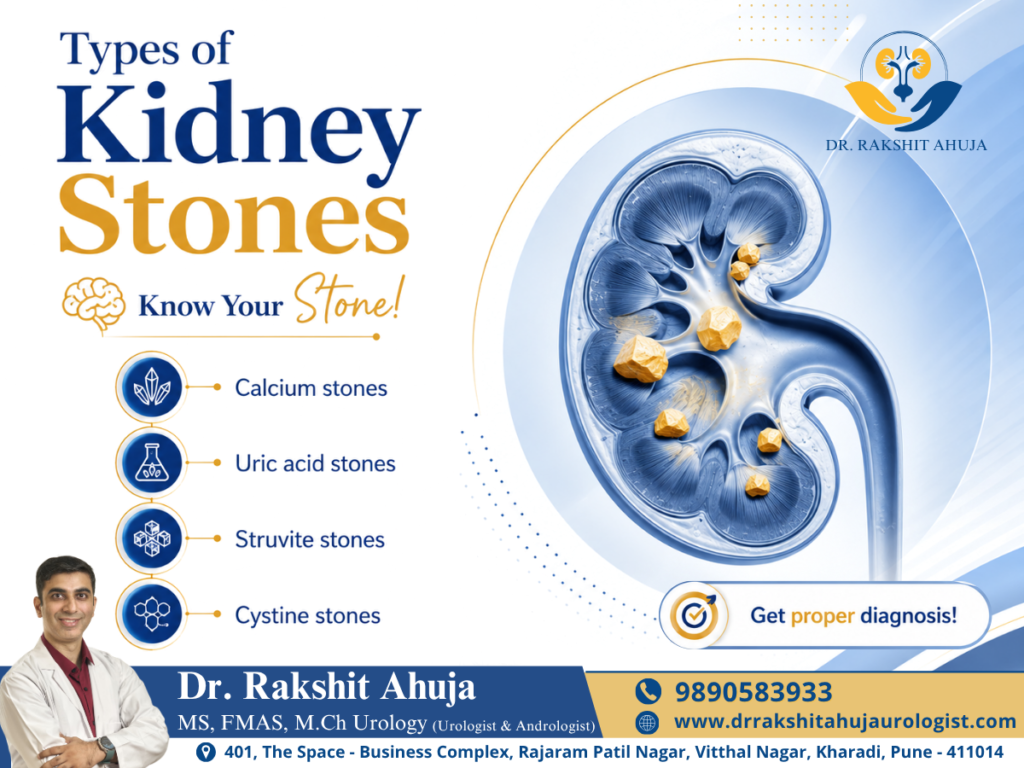
Kidney stones are one of the most common urological conditions affecting people of all age groups. These hard mineral deposits form inside the kidneys and can cause severe pain, urinary problems, and complications if left untreated. Understanding the type of kidney stone you have is essential because each type has different causes, risk factors, and treatment approaches.
As a leading Kidney Specialist in Pune, Dr. Rakshit Ahuja emphasizes the importance of accurate diagnosis and personalized treatment for kidney stone patients. Identifying the composition of a kidney stone helps prevent recurrence and ensures the most effective treatment plan.
What Are Kidney Stones?
Kidney stones are solid masses formed from minerals and salts present in urine. When certain substances become highly concentrated, they crystallize and gradually form stones. These stones can remain in the kidneys or travel through the urinary tract, causing intense discomfort and urinary obstruction.
The size of kidney stones can range from tiny crystals to larger stones that may require medical intervention. Early diagnosis by an experienced Kidney Specialist in Pune can help prevent complications and preserve kidney health.
Types of Kidney Stones
Understanding the different types of kidney stones is the first step toward effective treatment and prevention.
1. Calcium Stones
Calcium stones are the most common type of kidney stones, accounting for nearly 80% of all cases. These stones are usually composed of calcium oxalate, although some may contain calcium phosphate.
Causes:
- High oxalate intake from foods such as spinach, nuts, and chocolate
- Dehydration
- Excessive salt consumption
- Certain metabolic disorders
- Family history of kidney stones
Symptoms:
- Severe pain in the back or side
- Pain during urination
- Blood in urine
- Frequent urge to urinate
Preventing calcium stones often involves increasing water intake, reducing sodium consumption, and making dietary modifications under medical supervision.
2. Uric Acid Stones
Uric acid stones develop when urine becomes too acidic. They are commonly seen in individuals with high protein diets or certain metabolic conditions.
Causes:
- High consumption of red meat and seafood
- Obesity
- Diabetes
- Gout
- Chronic dehydration
Risk Factors:
People with persistently acidic urine are more likely to develop uric acid stones. Fortunately, these stones can often be prevented and treated through dietary changes and medications that help balance urine pH.
3. Struvite Stones
Struvite stones are typically associated with urinary tract infections (UTIs). These stones can grow rapidly and become quite large if not treated promptly.
Causes:
- Recurrent urinary tract infections
- Bacterial infections affecting the urinary system
Characteristics:
- Often larger than other stone types
- Can cause urinary blockage
- May lead to kidney damage if untreated
Because struvite stones are linked to infections, treating the underlying infection is a critical part of management. Early intervention by Dr. Rakshit Ahuja, Kidney Specialist in Pune, can help prevent serious complications.
4. Cystine Stones
Cystine stones are relatively rare and occur due to a hereditary condition known as cystinuria. This disorder causes excessive amounts of the amino acid cystine to leak into the urine, leading to stone formation.
Causes:
- Genetic inheritance
- Cystinuria
Challenges:
- Higher recurrence rates
- Often develop at a younger age
- Require long-term management
Patients with cystine stones need specialized treatment and regular follow-up to minimize recurrence and protect kidney function.
Common Symptoms of Kidney Stones
Regardless of the type, kidney stones may produce the following symptoms:
- Sharp pain in the back, side, or lower abdomen
- Pain that radiates toward the groin
- Blood in urine
- Cloudy or foul-smelling urine
- Frequent urination
- Burning sensation during urination
- Nausea and vomiting
- Fever and chills in cases of infection
If you experience any of these symptoms, seeking timely evaluation from a qualified Kidney Specialist in Pune is highly recommended.
How Are Kidney Stones Diagnosed?
Accurate diagnosis is essential for determining the type of stone and selecting the most appropriate treatment. Diagnostic methods may include:
- Urine analysis
- Blood tests
- Ultrasound scan
- CT scan
- X-rays
- Stone composition analysis
At the clinic of Dr. Rakshit Ahuja, patients receive comprehensive evaluation and advanced diagnostic support to ensure precise treatment planning.
Treatment Options for Kidney Stones
The treatment approach depends on the stone’s size, location, and composition.
Conservative Management
Small stones may pass naturally with:
- Increased water intake
- Pain management medications
- Medical expulsive therapy
Advanced Treatment Options
For larger or problematic stones:
- Laser stone removal
- Ureteroscopy (URS)
- Retrograde Intrarenal Surgery (RIRS)
- Percutaneous Nephrolithotomy (PCNL)
- Shock Wave Lithotripsy (SWL)
Choosing the right procedure requires expert evaluation from an experienced Kidney Specialist in Pune.
Tips to Prevent Kidney Stones
Preventing kidney stones is often easier than treating them. Here are some practical prevention tips:
- Drink at least 2.5 to 3 liters of water daily
- Limit excessive salt intake
- Maintain a balanced diet
- Reduce sugary beverages
- Avoid excessive animal protein consumption
- Manage underlying conditions such as diabetes and gout
- Follow your doctor’s dietary recommendations
Regular health checkups and personalized guidance can significantly reduce the risk of recurrence.
Why Choose Dr. Rakshit Ahuja for Kidney Stone Treatment in Pune?
When it comes to kidney stone management, expertise and timely intervention make a significant difference. Dr. Rakshit Ahuja, Kidney Specialist in Pune, offers comprehensive diagnosis, advanced treatment options, and personalized care for patients suffering from kidney stones and other urological conditions.
With a patient-centered approach and modern treatment techniques, Dr. Rakshit Ahuja focuses on providing effective solutions while minimizing discomfort and recovery time.
Conclusion
Kidney stones can significantly impact your quality of life, but understanding the type of stone is the key to successful treatment and prevention. Whether it is calcium stones, uric acid stones, struvite stones, or cystine stones, each requires a tailored approach for the best outcomes.
If you are experiencing symptoms of kidney stones or looking for expert guidance, consult Dr. Rakshit Ahuja, Kidney Specialist in Pune. Early diagnosis and appropriate treatment can help you achieve long-term kidney health and prevent future stone formation.