
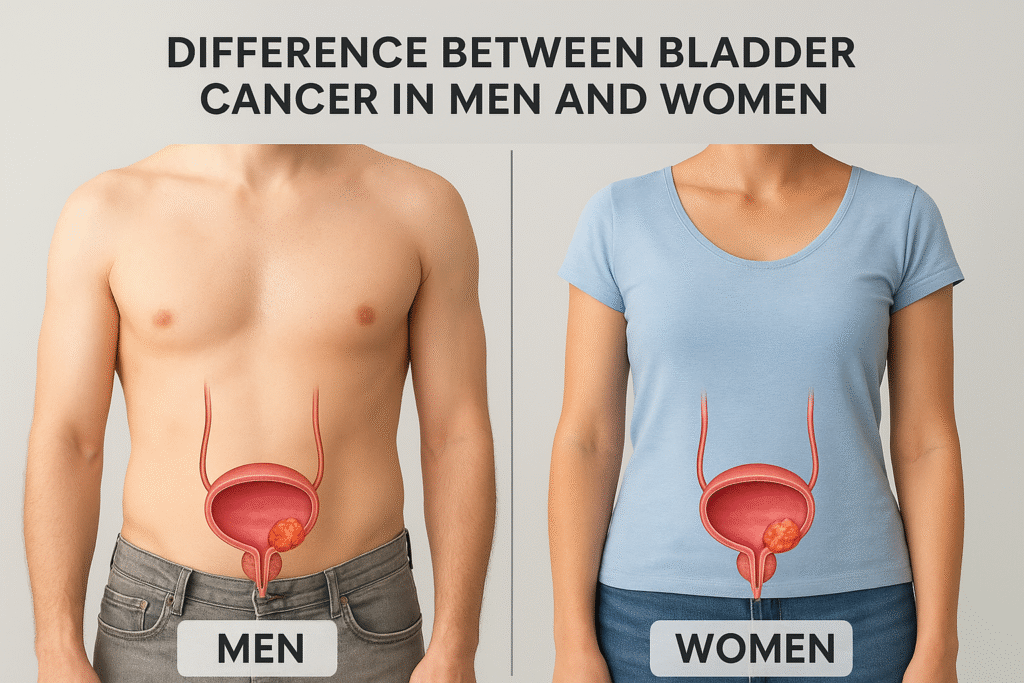
Bladder cancer is one of the most common cancers affecting the urinary system, and while it can occur in both men and women, its impact, symptoms, and outcomes often differ between genders. Understanding these differences is crucial for early diagnosis, effective treatment, and improved survival rates. As a trusted Urologist In Pune, Dr. Rakshit Ahuja emphasizes the importance of gender-specific awareness in bladder cancer care to ensure timely medical attention.
In this blog, we will explore how bladder cancer varies in men and women, from risk factors and symptoms to diagnosis, treatment, and prognosis.
Prevalence and Risk Factors
Bladder cancer is statistically more common in men. Studies suggest that men are three to four times more likely to be diagnosed with bladder cancer compared to women. However, women often face more aggressive forms of the disease, which can result in worse outcomes.
In Men:
- Higher prevalence: Men are more frequently diagnosed due to greater exposure to risk factors like smoking and occupational hazards.
- Lifestyle connection: Long-term smoking and exposure to chemicals such as arsenic, paints, or dyes significantly increase the risk.
- Hormonal influence: Male hormones may play a role in bladder cancer development.
In Women:
- Delayed diagnosis: Women are often misdiagnosed initially with urinary tract infections (UTIs), leading to delays in cancer detection.
- Aggressiveness: When bladder cancer does occur, it tends to be more advanced and aggressive.
- Biological factors: Hormonal differences and genetic variations may contribute to disease progression.
If you notice persistent urinary symptoms, consulting an experienced Urology Doctor In Pune can help you differentiate between common infections and more serious conditions like bladder cancer.
Symptoms: How They Differ in Men and Women
Bladder cancer symptoms may overlap between genders, but they are often interpreted differently, which affects diagnosis timelines.
Common Symptoms:
- Blood in urine (hematuria)
- Painful urination
- Frequent urination
- Pelvic or back pain in advanced stages
In Men:
Men usually report blood in urine earlier and are more likely to undergo further urological investigations.
In Women:
Women often present with repeated UTIs or urinary discomfort, which delays cancer evaluation. This leads to later detection when the cancer is already more advanced.
For both men and women, ignoring these warning signs can reduce treatment success. That is why timely Bladder Cancer Treatment In Pune is essential for better outcomes.
Diagnosis and Delays
Diagnostic approaches are similar for men and women, including urine tests, cystoscopy, imaging (CT/MRI), and biopsy. However, the difference lies in timing.
- Men: Usually undergo earlier referral to a urologist due to visible hematuria.
- Women: Often experience months of delay because hematuria is sometimes attributed to gynecological issues or UTIs.
These delays contribute to women being diagnosed at more advanced stages, which significantly affects survival rates.
An experienced Urologist In Pune can play a critical role in identifying early warning signs and recommending appropriate diagnostic steps without unnecessary delay.
Treatment Differences
The standard treatments for bladder cancer include surgery, chemotherapy, immunotherapy, and radiation. But gender differences impact treatment planning and response.
In Men:
- Men often undergo transurethral resection (TURBT) followed by intravesical therapies.
- Radical cystectomy (removal of the bladder) may be required in advanced cases.
- Men generally respond better to treatment because the disease is caught earlier.
In Women:
- Women undergoing bladder removal surgery often face greater challenges due to anatomical differences.
- Fertility, reproductive health, and post-surgical recovery require more specialized care.
- Since diagnosis is frequently delayed, treatments are often more aggressive.
Choosing the right Bladder Cancer Treatment In Pune ensures a personalized approach that considers gender-specific needs.
Prognosis and Survival Rates
Survival rates differ significantly between men and women. While men are diagnosed more frequently, they usually have higher survival rates because of earlier detection. Women, on the other hand, have lower survival rates due to late diagnosis and more aggressive cancer subtypes.
- Men: Higher incidence but better outcomes.
- Women: Lower incidence but poorer prognosis.
This highlights the urgent need for better awareness of bladder cancer symptoms in women and proactive health check-ups with a reliable Urology Doctor In Pune.
Why Gender-Specific Awareness Matters
- Early detection saves lives – Recognizing that women may not always present with typical symptoms can help reduce diagnostic delays.
- Personalized treatment – Gender-based anatomical and hormonal differences must be considered during treatment planning.
- Better outcomes – Awareness campaigns targeting both men and women can improve survival rates.
Conclusion
Bladder cancer affects both men and women, but the differences in risk factors, symptoms, and outcomes cannot be ignored. Men are more frequently diagnosed, but women often face worse prognoses due to delays in detection and more aggressive disease progression.
If you or your loved ones experience symptoms such as persistent urinary discomfort, blood in urine, or frequent UTIs, it’s important not to ignore them. Seeking expert care from an experienced Urologist In Kharadi, Pune can make all the difference.
Dr. Rakshit Ahuja, a trusted name in advanced urological care, provides comprehensive evaluation and Bladder Cancer Treatment In Pune tailored to individual needs. With specialized expertise as a leading Urology Doctor In Pune, he is committed to delivering compassionate and effective care for both men and women battling bladder cancer.
Early awareness, timely diagnosis, and expert treatment are the keys to improving outcomes in bladder cancer—regardless of gender.
📞 Book an Appointment: 98905 83933
🌐 Visit Our Website: www.drrakshitahujaurologist.com
 Select an element to maximize. Press ESC to cancel.