
Kidney stones are a common urinary tract condition that can affect people of different ages. Because symptoms and treatment can vary considerably, it is important to understand the condition rather than rely on commonly repeated assumptions.
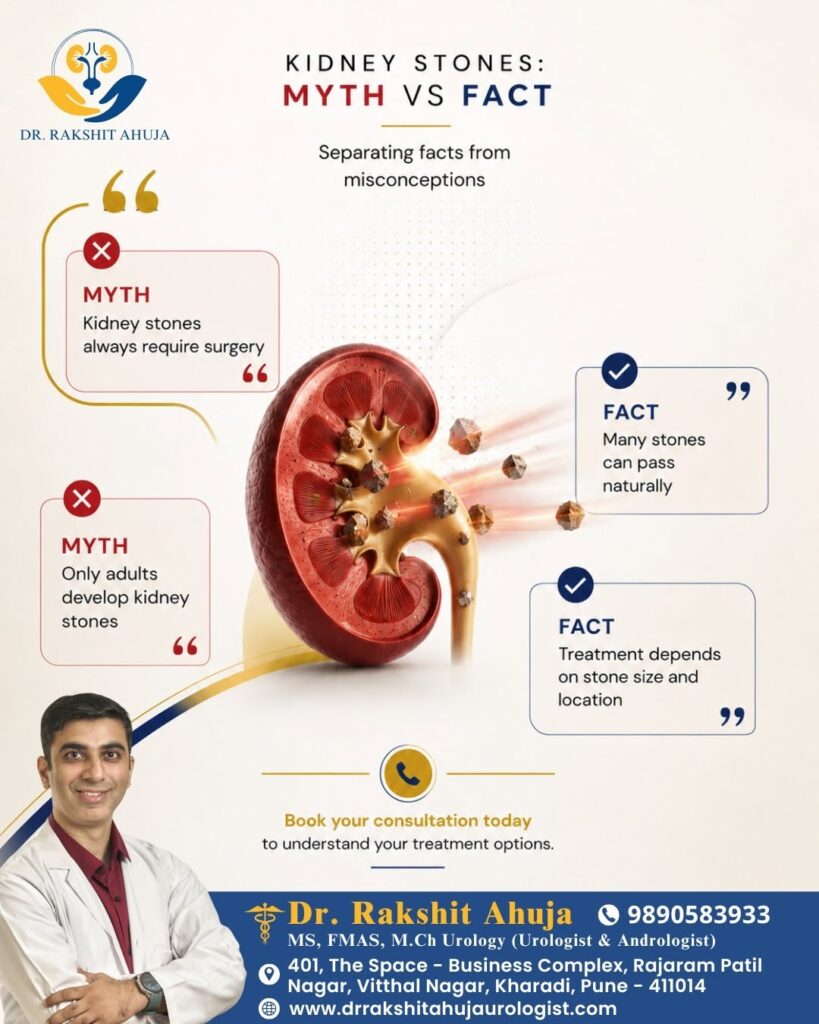
The infographic highlights two important misconceptions: kidney stones do not always require surgery, and they are not limited to adults. In many situations, the appropriate approach depends on factors such as the stone’s size, location, symptoms, and the patient’s overall health.
Dr. Rakshit Ahuja, Urologist in Pune, provides urological evaluation and treatment based on individual patient requirements. The information below is intended for general education and should not replace a consultation with a qualified medical professional.
Myth 1: Kidney Stones Always Require Surgery
Fact: Not every kidney stone requires a surgical procedure.
Some smaller stones may pass through the urinary tract naturally. A doctor may recommend observation, hydration advice, pain management, and follow-up depending on the individual situation.
However, a stone that is larger, causing persistent symptoms, blocking urine flow, associated with infection, or unlikely to pass on its own may require active treatment.
The decision should be based on medical evaluation rather than the size of the stone alone.
Myth 2: Only Adults Develop Kidney Stones
Fact: Kidney stones can occur in children and younger individuals as well as adults.
Several factors may contribute to stone formation, including family history, dietary patterns, fluid intake, certain metabolic conditions, and some medical disorders. Children or younger patients with suspected stones require appropriate evaluation to understand the underlying cause and determine suitable management.
Anyone experiencing persistent urinary symptoms should discuss them with a healthcare professional.
What Causes Kidney Stones?
Kidney stones form when certain substances in urine become concentrated and form crystals. These crystals can gradually grow into stones.
Different types of stones can develop, with calcium-based stones being among the commonly encountered types. Diet, hydration, genetics, medications, and certain health conditions may influence the risk.
Maintaining adequate fluid intake is often an important part of kidney stone prevention, although individual recommendations can vary. People with recurrent stones may benefit from a medical assessment to identify possible contributing factors.
Common Symptoms
Some stones may not cause noticeable symptoms, particularly when they are small or remain in a location where they do not obstruct urine flow.
When symptoms occur, they can include:
- Pain in the side, back, or lower abdomen
- Pain that may move toward the groin
- Burning or discomfort while urinating
- Increased urinary frequency or urgency
- Blood in the urine
- Nausea or vomiting
Symptoms can vary from person to person. Similar symptoms may also occur with other urinary conditions, so proper assessment is important.
How Are Kidney Stones Diagnosed?
A doctor may consider the patient’s symptoms and medical history before recommending investigations. Depending on the situation, evaluation may include urine tests, blood tests, ultrasound, or other imaging examinations.
Imaging can help determine the stone’s size and location and whether there is any obstruction. This information can be useful when deciding between observation and active treatment.
Treatment Depends on Stone Size and Location
There is no single treatment that is appropriate for every patient. Kidney stone treatment may range from observation and supportive care to procedures designed to remove or fragment the stone.
For selected patients, treatment options may include procedures such as shock wave therapy, ureteroscopy, or other minimally invasive techniques. The choice depends on factors including the stone’s characteristics, symptoms, urinary obstruction, infection risk, and the patient’s medical history.
A urologist can explain the advantages, limitations, and expected recovery associated with an appropriate treatment option.
When Should You See a Urologist?
It is advisable to seek medical evaluation when symptoms suggest a possible urinary stone, particularly when pain is persistent or severe.
Urgent medical attention may be necessary when symptoms are accompanied by fever or chills, significant difficulty passing urine, persistent vomiting, or severe worsening pain. These symptoms can sometimes indicate complications requiring prompt assessment.
People who have experienced stones previously may also benefit from professional guidance regarding recurrent kidney stones and preventive measures.
Prevention and Long-Term Kidney Health
Preventing future stones often involves understanding why they formed in the first place. Depending on the type of stone and individual risk factors, a healthcare professional may recommend changes involving fluid intake, diet, or management of an underlying condition.
Rather than following generalized advice from social media or online sources, patients with recurrent stones should discuss prevention strategies with a qualified specialist.
Choosing the Right Urological Care
Kidney stone management should be personalized. A stone that passes naturally in one person may require treatment in another because of differences in size, location, symptoms, or associated health concerns.
Dr. Rakshit Ahuja, Urologist in Pune offers urological evaluation for patients seeking professional guidance regarding urinary and kidney-related concerns. Patients can discuss their symptoms and receive recommendations based on their individual clinical situation.
Final Thoughts
Kidney stones do not automatically mean surgery, and they are not exclusively an adult condition. The right approach depends on the individual patient and the characteristics of the stone.
Understanding the difference between myths and medical facts can help patients make informed decisions and seek appropriate care when necessary. If you experience symptoms suggestive of a urinary stone, consult a qualified urologist rather than relying on self-diagnosis.
This article is for general educational purposes only and does not constitute medical diagnosis or treatment advice.