
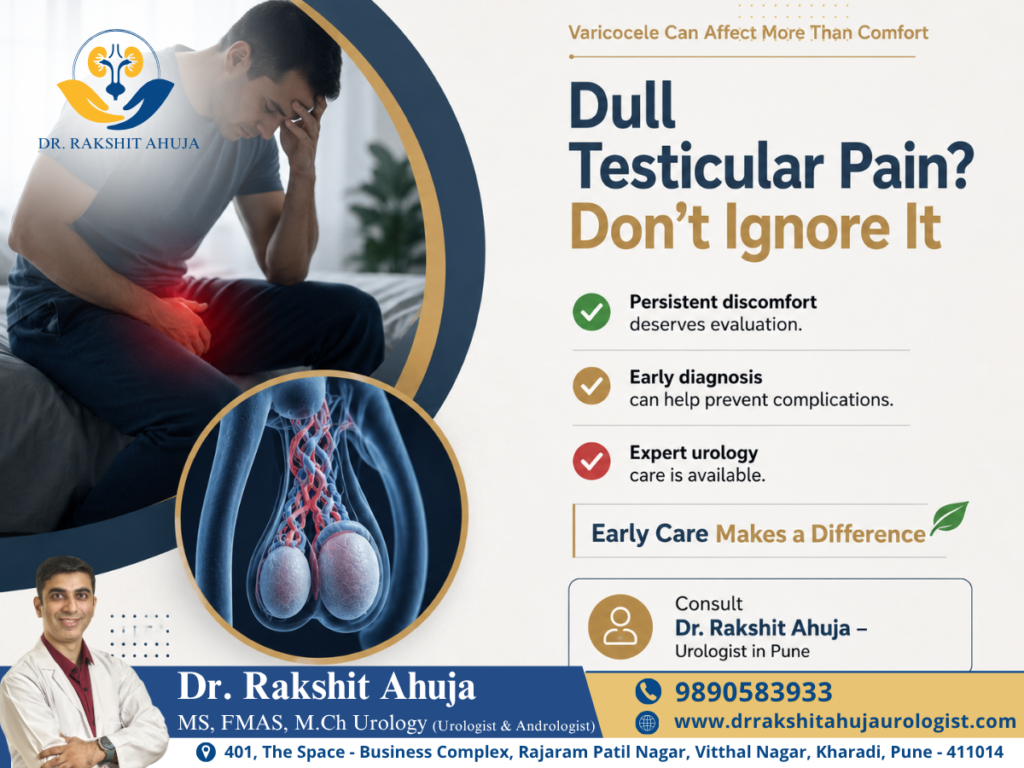
Dull or persistent testicular pain can be uncomfortable, worrying, and sometimes difficult to discuss. While occasional discomfort may have a simple cause, ongoing pain or heaviness in the scrotum should not be ignored. One possible cause is varicocele, a condition involving enlarged veins in the scrotum that can sometimes lead to discomfort and other concerns.
If you are experiencing persistent testicular pain, heaviness, or swelling, an evaluation by a qualified urologist can help identify the underlying cause. Dr. Rakshit Ahuja, Urologist in Pune, provides urological care and evaluation for men experiencing concerns related to varicocele and other urinary and reproductive health conditions.
What Is a Varicocele?
A varicocele is an enlargement of veins within the scrotum, similar to varicose veins that can occur in the legs. It commonly develops when blood does not flow efficiently through the veins, causing blood to collect and the veins to become enlarged.
Varicoceles are relatively common and may not always cause noticeable symptoms. Some men may discover a varicocele during a routine examination, while others may seek medical attention because of discomfort, swelling, or concerns about fertility.
The condition can occur on one or both sides, although it is more commonly seen on the left side.
What Does Varicocele Pain Feel Like?
Varicocele-related discomfort may vary from person to person. Some men may experience:
- A dull, aching sensation in the testicle or scrotum
- A feeling of heaviness or dragging
- Discomfort that becomes more noticeable after prolonged standing
- Pain that increases after physical activity
- Symptoms that improve when lying down
- Visible or enlarged veins in the scrotum
The pain may not always be severe. However, persistent or recurring testicular discomfort deserves proper medical evaluation rather than being ignored.
It is also important to remember that testicular pain can have several possible causes. Varicocele is only one of them, and a proper diagnosis is necessary before deciding on treatment.
Can Varicocele Affect Fertility?
In some men, varicocele may be associated with fertility concerns. The enlarged veins can potentially affect the environment around the testicles, and in certain cases, this may be associated with changes in sperm production or quality.
However, having a varicocele does not automatically mean that a man will have fertility problems. Many men with varicocele do not experience infertility.
If you are concerned about fertility, a urologist may recommend appropriate evaluation based on your individual circumstances. This may include a physical examination, scrotal ultrasound, or semen analysis when clinically indicated.
How Is Varicocele Diagnosed?
A urologist generally begins with a detailed discussion about symptoms and medical history, followed by a physical examination. The doctor may examine the scrotum while the patient is standing and may ask the patient to perform certain maneuvers that can make a varicocele easier to detect.
In some cases, a scrotal ultrasound with Doppler evaluation may be recommended. This can help assess blood flow and provide additional information about the veins and surrounding structures.
A proper evaluation is especially important when testicular pain is persistent, unexplained, or associated with swelling or other symptoms.
Does Every Varicocele Need Treatment?
Not every varicocele requires immediate treatment. Management depends on factors such as the severity of symptoms, the size of the varicocele, fertility concerns, testicular development, and the overall clinical assessment.
For some patients, observation and regular follow-up may be appropriate. If symptoms are significant or if there are specific fertility or testicular concerns, a urologist may discuss suitable treatment options.
Treatment decisions should always be individualized rather than based solely on the presence of a varicocele.
Treatment Options for Varicocele
When treatment is recommended, the appropriate approach depends on the patient’s condition and medical needs. A urologist may discuss options that can address the abnormal blood flow in the affected veins.
Depending on the diagnosis, treatment may include surgical or minimally invasive approaches. The goal is to manage symptoms and address relevant clinical concerns while selecting the most appropriate option for the individual patient.
A detailed consultation with a urologist can help you understand whether treatment is necessary and which approach may be suitable.
When Should You See a Urologist?
You should consider consulting a urologist if you experience:
- Persistent or recurring testicular pain
- A feeling of heaviness in the scrotum
- Swelling or enlarged veins
- A noticeable difference in testicular size
- Concerns about male fertility
- Unexplained discomfort that worsens with standing or physical activity
Sudden and severe testicular pain requires urgent medical assessment, as it can sometimes indicate a condition that needs immediate treatment.
Consult Dr. Rakshit Ahuja, Urologist in Pune
If you are searching for a Urologist in Pune for evaluation of varicocele, testicular pain, or other urological concerns, Dr. Rakshit Ahuja, Urologist in Pune, offers professional urological consultation and personalized evaluation.
Persistent discomfort should not be dismissed simply because the pain is mild. Identifying the cause early can help you understand your condition and explore appropriate management options when needed.
If you are experiencing ongoing testicular discomfort or have concerns about a possible varicocele, consider scheduling a consultation with Dr. Rakshit Ahuja, Urologist in Pune for an appropriate clinical evaluation.
Disclaimer: This blog is intended for general educational purposes and should not be considered a substitute for professional medical advice, diagnosis, or treatment. Seek urgent medical attention for sudden or severe testicular pain.