
Urinary incontinence is a common yet often misunderstood condition that affects people of all ages. It refers to the loss of bladder control, leading to accidental leakage of urine. While many individuals feel embarrassed to discuss it, incontinence is a medical condition that can be effectively treated with proper care and guidance.
In this blog, Dr. Rakshit Ahuja, Urologist in Pune, explains the major causes of incontinence, helping you understand when to seek expert help and how timely treatment can improve your quality of life.
What Is Urinary Incontinence?
Urinary incontinence occurs when you lose control over your bladder. It may range from occasional leakage while coughing or sneezing to a sudden, uncontrollable urge to urinate.
There are different types of incontinence, including:
- Stress incontinence
- Urge incontinence
- Overflow incontinence
- Functional incontinence
Identifying the underlying cause is the first step toward effective treatment. If you are looking for expert UTI treatment in Pune or advanced bladder care, consulting a specialist is essential.
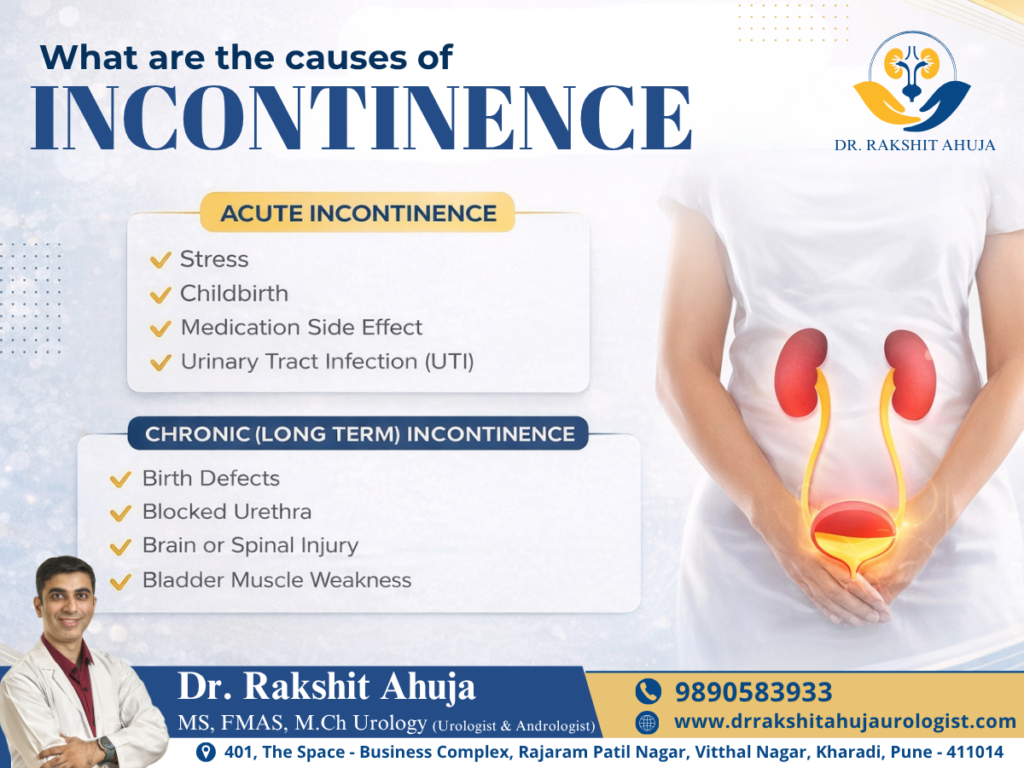
Causes of Acute (Temporary) Incontinence
Acute incontinence is usually short-term and often reversible once the underlying issue is treated.
1. Stress
Physical stress on the bladder can cause leakage, especially during activities like coughing, laughing, sneezing, or lifting heavy objects. This is more common in women due to weakened pelvic floor muscles.
2. Childbirth
Pregnancy and vaginal delivery can stretch and weaken the pelvic floor muscles and nerves that control the bladder. This can lead to temporary or sometimes long-term incontinence.
3. Medication Side Effects
Certain medications such as diuretics, sedatives, or blood pressure drugs can affect bladder function. They may increase urine production or interfere with bladder control, leading to temporary leakage.
4. Urinary Tract Infection (UTI)
A Urinary Tract Infection (UTI) is one of the most common causes of sudden incontinence. It can irritate the bladder, causing a strong urge to urinate and sometimes leakage before reaching the toilet.
If you experience burning sensation, frequent urination, or discomfort, seeking timely UTI treatment in Pune from Dr. Rakshit Ahuja, Urologist in Pune can help prevent complications.
Causes of Chronic (Long-Term) Incontinence
Chronic incontinence develops over time and may require long-term management or treatment.
1. Birth Defects
Certain congenital conditions can affect the structure or function of the urinary system, leading to lifelong bladder control issues.
2. Blocked Urethra
A blockage in the urethra, such as kidney stones or an enlarged prostate in men, can prevent normal urine flow. This may result in overflow incontinence, where the bladder cannot empty completely.
3. Brain or Spinal Injury
The brain and spinal cord play a crucial role in bladder control. Any injury or neurological condition such as stroke, Parkinson’s disease, or spinal cord injury can disrupt signals between the brain and bladder, leading to incontinence.
4. Bladder Muscle Weakness
As we age, the bladder muscles may weaken, reducing their ability to hold urine effectively. This can lead to frequent leakage and urgency.
Risk Factors for Incontinence
Certain factors increase the likelihood of developing urinary incontinence:
- Aging
- Obesity
- Chronic cough
- Smoking
- Diabetes
- Hormonal changes (especially in women)
Understanding these risk factors can help in early detection and prevention.
When Should You See a Urologist?
You should not ignore symptoms of incontinence, especially if they:
- Occur frequently
- Affect your daily activities
- Cause embarrassment or discomfort
- Are associated with pain or burning sensation
Early diagnosis can prevent the condition from worsening. Consulting Dr. Rakshit Ahuja, Urologist in Pune ensures accurate evaluation and personalized treatment.
Diagnosis and Treatment Options
The treatment of incontinence depends on its cause and severity. A urologist may recommend:
Diagnosis:
- Urine tests
- Ultrasound
- Bladder function tests
- Physical examination
Treatment Options:
- Lifestyle modifications
- Pelvic floor exercises (Kegel exercises)
- Medications
- Bladder training
- Minimally invasive procedures or surgery (if required)
For patients dealing with infections, expert UTI treatment in Pune is crucial to eliminate the root cause and restore bladder health.
Tips to Prevent Incontinence
While not all cases can be prevented, certain lifestyle changes can reduce the risk:
- Maintain a healthy weight
- Practice pelvic floor exercises regularly
- Stay hydrated but avoid excessive caffeine
- Quit smoking
- Treat UTIs promptly
- Follow a balanced diet
These small steps can make a significant difference in maintaining bladder control.
Why Choose Dr. Rakshit Ahuja?
When it comes to urological health, choosing the right specialist is key. Dr. Rakshit Ahuja, Urologist in Pune, is known for providing comprehensive care with a patient-focused approach.
Whether you are dealing with urinary incontinence, kidney stones, or need reliable UTI treatment in Pune, you can expect:
- Accurate diagnosis
- Advanced treatment options
- Personalized care plans
- Compassionate support
Conclusion
Urinary incontinence is a manageable condition, and understanding its causes is the first step toward recovery. Whether it is temporary due to a UTI or a chronic issue requiring long-term care, timely intervention can significantly improve your quality of life.
If you are experiencing symptoms of incontinence, do not hesitate to consult Dr. Rakshit Ahuja, Urologist in Pune. With the right guidance and treatment, you can regain control and confidence in your daily life.