
Prostate health becomes increasingly important with age, particularly when symptoms or diagnostic tests indicate an underlying prostate condition. When prostate cancer is diagnosed, patients and families often have questions about available treatment options, surgical procedures, recovery, and what approach may be appropriate for their individual situation. Understanding the available choices can make discussions with a specialist more informed and comfortable.
Dr. Rakshit Ahuja, a urologist and andrologist in Pune, provides consultation for patients with prostate-related conditions and helps them understand suitable treatment options based on their diagnosis and individual medical requirements.
Understanding Prostate Cancer
The prostate is a small gland located below the urinary bladder and surrounding part of the urethra. It plays an important role in the male reproductive system. Prostate cancer develops when abnormal cells in the prostate grow in an uncontrolled manner.
Not every prostate cancer behaves in the same way. Some cancers may grow slowly, while others can be more aggressive. The appropriate management plan depends on several factors, including the stage and grade of the cancer, overall health, age, symptoms, test results, and individual preferences.
Common investigations may include a clinical examination, prostate-specific antigen testing, imaging, and prostate biopsy when recommended by a specialist.
What Is Robotic Prostate Surgery?
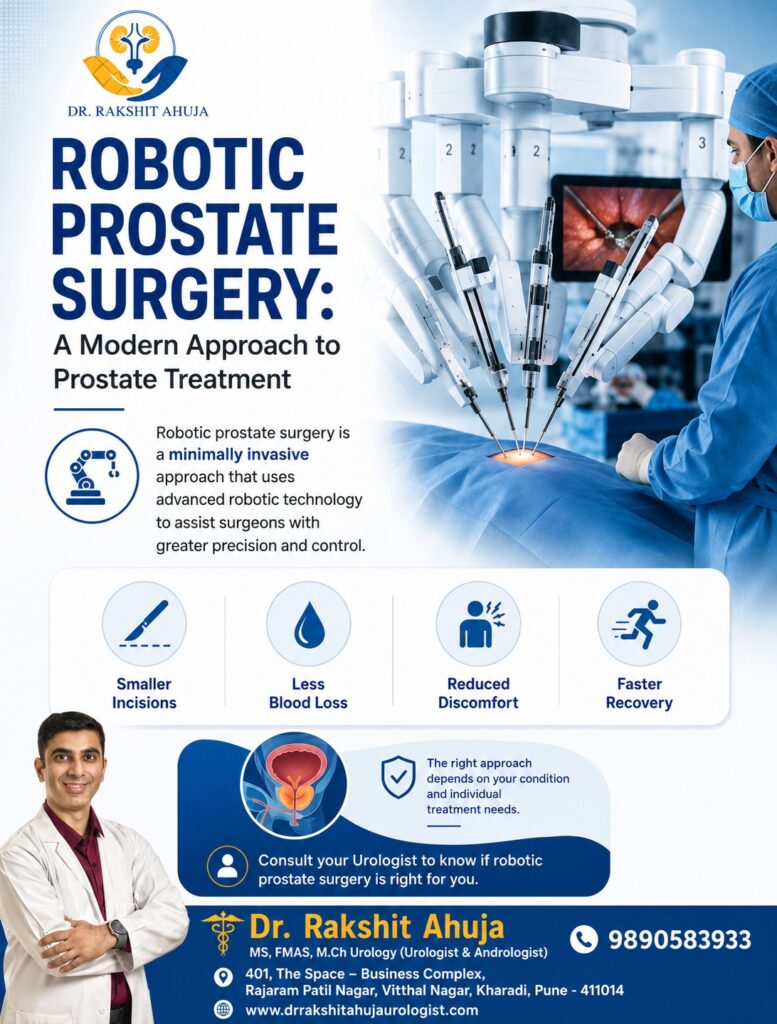
Robotic-assisted prostate surgery is a minimally invasive surgical approach that uses specialized robotic technology. The robotic system does not independently perform the operation. Instead, the surgeon controls the instruments through a console and uses the system to assist with precise movements during the procedure.
For selected patients requiring surgical removal of the prostate, robotic-assisted surgery may be considered as one of the treatment approaches.
The suitability of surgery depends on the individual’s cancer characteristics and overall medical condition. A urologist can explain whether surgery is appropriate after reviewing the patient’s diagnostic information.
Potential Features of a Minimally Invasive Approach
Robotic-assisted procedures may involve smaller surgical openings compared with some traditional surgical approaches. Depending on the patient’s circumstances and the procedure performed, potential benefits may include smaller incisions and a recovery process that can be different from conventional open surgery.
However, treatment outcomes vary between individuals. Factors such as the stage of disease, surgical complexity, general health, and postoperative care can influence recovery.
It is important to discuss both potential benefits and possible risks with the treating surgeon before making a treatment decision.
Why Individualized Treatment Matters
There is no single treatment plan that is suitable for every person diagnosed with prostate cancer. Depending on the circumstances, treatment may involve active surveillance, surgery, radiation therapy, hormone-based treatment, or other approaches.
For some patients, monitoring may be appropriate, particularly when the disease has characteristics associated with slower progression. For others, active treatment may be recommended.
A specialist evaluates the available information before suggesting an appropriate management strategy. This approach helps ensure that treatment decisions are based on the patient’s actual medical needs rather than on a general assumption.
What Patients Can Discuss With Their Urologist
Patients preparing for a consultation may find it useful to ask questions such as:
- What is the stage and grade of the prostate cancer?
- What treatment options are available?
- Is surgery appropriate in my situation?
- Could robotic-assisted surgery be considered?
- What are the potential benefits and risks?
- What can I expect during recovery?
- Are additional treatments or follow-up evaluations required?
Having these questions ready can help patients better understand their diagnosis and participate actively in treatment discussions.
Preparing for Prostate Cancer Treatment
Before any procedure, the medical team may review the patient’s medical history, medications, previous investigations, imaging reports, and general health. Additional tests may be recommended when necessary.
Patients should provide their doctor with complete information about existing medical conditions and medicines they are taking. Following preoperative and postoperative instructions carefully can also support appropriate recovery.
After treatment, regular follow-up is an important part of prostate cancer care. The follow-up schedule depends on the individual’s diagnosis and treatment plan.
Choosing a Urology Specialist in Pune
Patients looking for Prostate Cancer Treatment In Pune should consider consulting a qualified urologist who can evaluate their condition and explain appropriate treatment options.
Dr. Rakshit Ahuja offers urological consultation in Pune, including evaluation and treatment planning for prostate-related conditions. His approach focuses on understanding the patient’s diagnosis and discussing suitable options according to individual medical requirements.
Robotic prostate surgery can be an important treatment option for selected patients, but it is not appropriate for everyone. A detailed consultation and proper evaluation are essential before deciding on any surgical procedure.
Conclusion
A prostate cancer diagnosis can bring many questions, but understanding the condition and available treatment approaches can help patients make informed decisions. Robotic-assisted prostate surgery represents a modern minimally invasive approach that may be suitable for selected patients requiring surgery.
If you or a family member has been diagnosed with prostate cancer or has concerns regarding prostate health, consult a qualified urologist for an appropriate evaluation. Dr. Rakshit Ahuja can help patients understand their diagnosis, available treatment approaches, and the next steps in their individual care journey.
This content is for general educational purposes and does not replace professional medical advice, diagnosis, or treatment. Treatment decisions should be made after consultation with a qualified healthcare professional.