
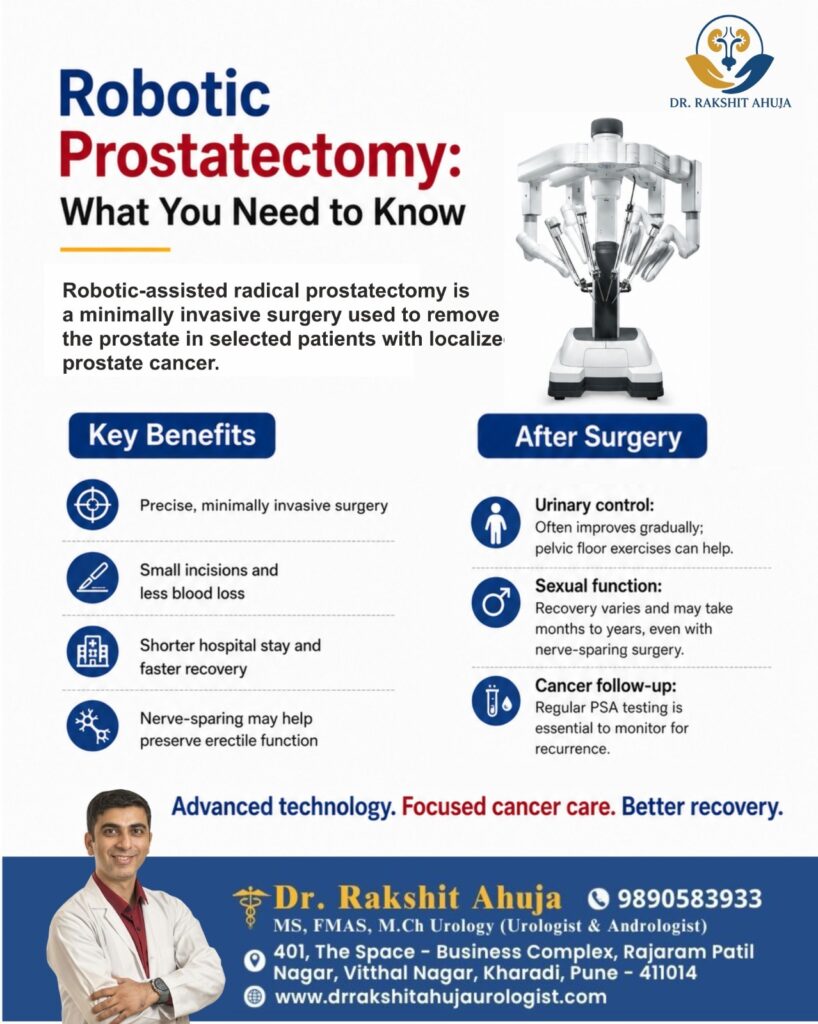
A diagnosis of prostate cancer can bring many questions about treatment, recovery and quality of life. When prostate cancer is localized, surgery may be one of the treatment options considered depending on the patient’s age, overall health, cancer characteristics and personal preferences.
One modern surgical approach is robotic prostatectomy, in which the surgeon uses a robotic-assisted surgical system to perform precise movements through small incisions.
Patients searching for a Urologist in Viman Nagar can consult Dr. Rakshit Ahuja for evaluation of prostate conditions and a discussion about appropriate treatment options based on their individual diagnosis.
What Is Robotic Prostatectomy?
Robotic-assisted radical prostatectomy is a minimally invasive operation used to remove the prostate gland, usually as part of the treatment of selected patients with localized prostate cancer. Depending on the clinical situation, nearby structures such as the seminal vesicles may also be removed.
Despite the name, the robot does not independently perform the operation. The procedure is controlled by the surgeon, who operates specialized instruments from a surgical console.
The robotic platform provides magnified three-dimensional visualization and instruments designed for precise movement within a relatively confined anatomical area.
Who May Be Considered for the Procedure?
Robotic prostatectomy is not automatically the best treatment for every person diagnosed with prostate cancer.
Treatment decisions may depend on factors such as:
- Stage and characteristics of the cancer
- PSA level
- Biopsy and imaging findings
- Patient’s age and general health
- Existing urinary symptoms
- Other medical conditions
- Expected benefits and possible risks of treatment
- Individual preferences and priorities
Some patients may be candidates for other approaches, including active surveillance, radiation therapy or other forms of prostate cancer treatment.
A detailed evaluation is therefore important before deciding on surgery.
What Are the Potential Benefits of Robotic Surgery?
Compared with traditional open surgery, the minimally invasive robotic approach uses smaller incisions. Depending on the individual patient and surgical circumstances, potential advantages may include reduced blood loss, a shorter hospital stay and an earlier return to certain routine activities.
The technology also gives the surgeon enhanced visualization of structures surrounding the prostate.
However, it is important to understand that robotic technology itself does not guarantee a particular outcome. Results depend on several factors, including the cancer, patient’s health, anatomy, surgical considerations and postoperative recovery.
What Is Nerve-Sparing Prostate Surgery?
Important nerves involved in erectile function run close to the prostate. In appropriately selected patients, a surgeon may attempt a nerve-sparing prostatectomy to preserve these structures.
Whether nerve sparing is appropriate depends primarily on cancer-related factors and the location and extent of the disease. Cancer control remains an important priority when planning the operation.
Even when nerve-sparing surgery is possible, erectile function may take time to recover and cannot be guaranteed.
Urinary Control After Prostatectomy
Temporary urinary incontinence can occur after prostate removal. Some patients experience urine leakage, particularly during activities such as coughing, lifting or changing position.
Urinary control commonly improves over time, although the rate and extent of recovery vary between individuals.
When recommended by the treating team, pelvic floor exercises may form part of rehabilitation. Patients should receive appropriate guidance on when and how to perform these exercises.
Persistent urinary problems should be discussed with the urologist rather than accepted as an unavoidable part of recovery.
What About Sexual Function After Surgery?
Changes in erectile function are another important consideration before prostate cancer surgery.
Recovery depends on several factors, including age, erectile function before surgery, other health conditions, cancer characteristics and whether nerve preservation was possible.
Improvement can be gradual and may continue over an extended period. Some patients may require medicines or other forms of erectile dysfunction treatment as part of rehabilitation.
Discussing sexual health before surgery helps patients and their partners develop realistic expectations about recovery.
Recovery After Robotic Prostatectomy
Recovery is different for every patient. Following surgery, patients are encouraged to follow their surgeon’s instructions regarding wound care, physical activity, catheter management and medications.
Walking and gradual activity may be encouraged during recovery, while strenuous exercise and heavy lifting are usually restricted initially.
Patients should seek medical advice if they develop concerning postoperative symptoms such as significant bleeding, increasing pain, fever, difficulty with catheter drainage or other unexpected changes.
Why Is PSA Follow-Up Important?
Removing the prostate does not mean that cancer monitoring ends.
PSA testing after prostatectomy is an important component of follow-up. PSA levels are monitored according to the treating doctor’s recommended schedule to assess the patient’s response after treatment and identify changes that may require further evaluation.
Follow-up appointments also provide an opportunity to discuss urinary recovery, sexual function and overall health.
The frequency and duration of monitoring depend on individual clinical circumstances.
Robotic Surgery Is a Technology, Not a Guarantee
One of the most important things for patients to understand is that robotic surgery is a surgical approach rather than a promise of a specific result.
Terms such as “minimally invasive” or “robotic” should not replace a careful discussion about the potential benefits, limitations and risks of surgery.
Possible complications of radical prostatectomy can include bleeding, infection, urinary leakage or incontinence, erectile dysfunction and other surgical or anaesthetic complications. Individual risks should be discussed with the treating surgeon before the procedure.
Making an Informed Decision About Prostate Cancer Treatment
Prostate cancer treatment should be individualized. Two patients with the same diagnosis may not necessarily require exactly the same approach.
Understanding the cancer stage, available treatments, expected recovery and possible effects on urinary and sexual function allows patients to participate meaningfully in treatment decisions.
Dr. Rakshit Ahuja provides evaluation and management for prostate cancer, prostate conditions, urinary problems and other urological concerns. Patients considering prostate surgery can discuss whether a robotic approach is suitable for their particular clinical situation.
Advanced technology can be valuable in modern urological surgery, but informed decision-making, appropriate patient selection and regular follow-up remain equally important parts of prostate cancer care.